Blackjack becomes expensive when a player learns the card values but not the order of the hand.
DataForSEO Malaysia/en SERP research for “blackjack card game how to play” showed a mixed search page: general card-game rules, casino-game explainers, Wikipedia, Reddit questions, a video result, and operator education pages. Most teach the basic aim — beat the dealer without passing 21. The Master’s guide is narrower and more useful for a real casino table: what happens in sequence, what each button means, and which beginner decisions cost money before strategy even begins.
Keep this lesson beside the Master’s blackjack guide, blackjack card values guide, 21+3 side-bet warning, table games hub, casino strategy hub, and responsible gambling vow.
The Object of Blackjack
The object is not to get as close to 21 as possible in every situation. The object is to beat the dealer without busting.
You win when:
- Your final total is higher than the dealer’s total.
- The dealer busts by going over 21 while you have not busted.
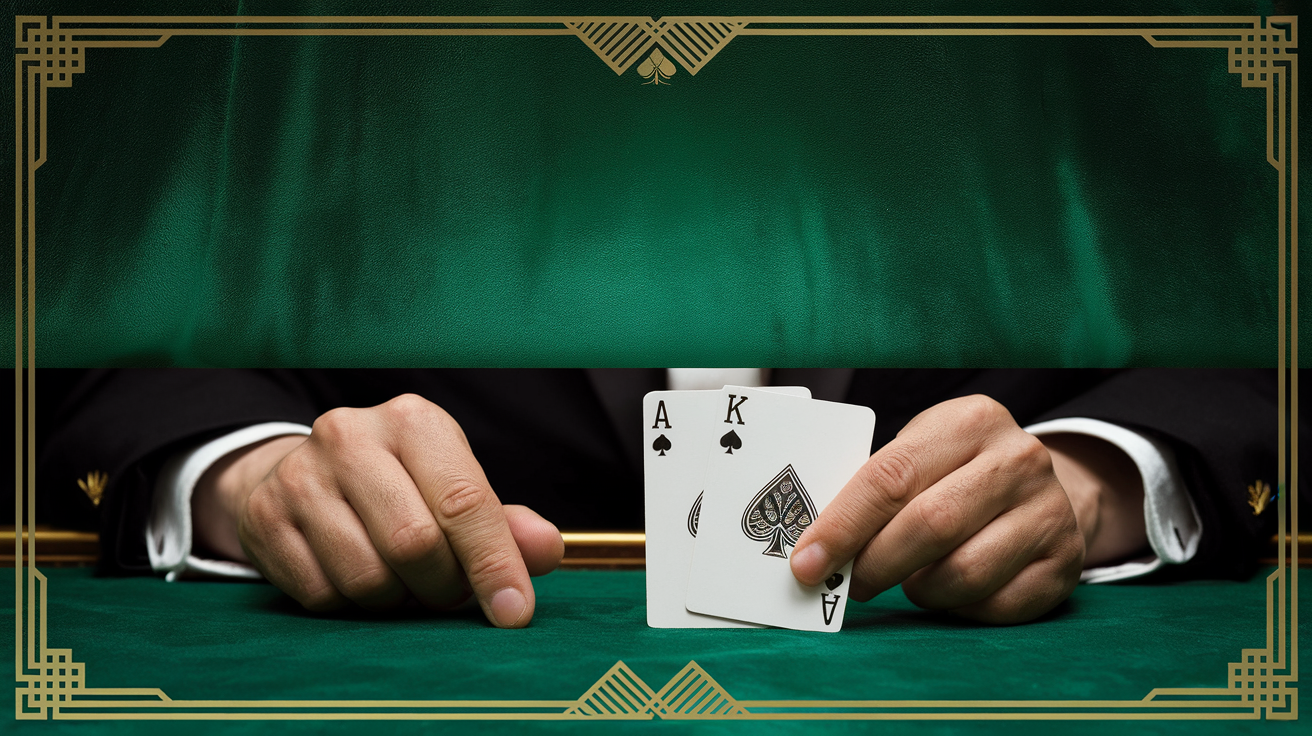
- You receive a natural blackjack and the dealer does not.
You lose when:
- Your hand goes over 21.
- The dealer finishes with a higher total.
- The dealer has blackjack and you do not.
You push when your final total ties the dealer’s final total, depending on table rules. A push usually returns your stake.
Card Values in One Table
| Card | Value | Master’s Note |
|---|---|---|
| 2 to 9 | Face value | Count exactly what you see |
| 10, J, Q, K | 10 | All ten-value cards behave the same in the main game |
| Ace | 1 or 11 | Use 11 only when it does not bust the hand |
| Two-card A + 10-value | Blackjack | Usually pays more than a normal win |
If card values still feel slow, read the full blackjack card values guide before playing for money. A player who cannot count the hand calmly should not be deciding with chips at risk.
The Flow of a Blackjack Hand
A normal casino blackjack hand moves in this order:
- Place the bet. You choose a stake before any cards appear.
- Cards are dealt. You receive two cards. The dealer receives one visible upcard and usually one hidden hole card.
- Check for blackjack. If an ace or 10-value upcard appears, the table may check for dealer blackjack depending on rules.
- Player decisions begin. You act before the dealer completes the hand.
- Dealer plays. After all players finish, the dealer draws or stands by fixed rule.
- Settlement. Wins, losses, pushes and blackjacks are paid.
The important point: the dealer does not improvise like you do. The dealer follows the house rule, often drawing to 16 and standing on 17. Your skill is choosing well before the dealer’s automatic finish.
Player Actions: Hit, Stand, Double, Split, Surrender
| Action | Meaning | When Beginners Misuse It |
|---|---|---|
| Hit | Take one more card | Hitting hard totals without noticing bust risk |
| Stand | Take no more cards | Standing on weak totals because they feel “close” |
| Double | Double the bet for one final card | Doubling without checking dealer upcard and table rules |
| Split | Separate a pair into two hands | Splitting 10s or weak pairs because matching cards look neat |
| Surrender | Forfeit half the bet and end the hand, if offered | Ignoring it on ugly hands where it may reduce loss |
Not every table offers surrender. Some restrict doubling after a split. Some change how many times aces can be split. These small rule lines affect the house edge, so the Master reads the table rules before the first bet.
Dealer Upcard: The Card That Changes the Hand
Your hand is only half the story. The dealer’s visible card tells you whether the dealer is under pressure.
| Dealer Upcard | Usual Meaning | Player Discipline |
|---|---|---|
| 2 or 3 | Mild dealer weakness | Avoid panic, but do not assume the dealer is doomed |
| 4, 5, 6 | Strong dealer bust pressure | Stand more often on stiff totals and let the dealer draw |
| 7, 8, 9 | Dealer can build a strong hand | You often need a competitive total |
| 10 | Dangerous | Weak totals are under pressure |
| Ace | Most dangerous | Insurance appears, but price it carefully |
A hard 16 against dealer 6 and hard 16 against dealer 10 have the same total. They are not the same decision. The upcard changes the risk map.
Blackjack Payouts and Table Price
A natural blackjack is usually an ace plus a 10-value card as your first two cards. The payout matters.
| Rule | RM100 Blackjack Profit | Master’s Verdict |
|---|---|---|
| 3:2 blackjack | RM150 | Proper price; prefer this table |
| 6:5 blackjack | RM120 | Worse value; walk if better tables exist |
| Even-money promotion wording | Varies | Read carefully; it may hide a weak price |
A 6:5 table can look normal to a beginner. It is not normal value. It takes money from your best hand before you make any decision.
Soft Hands and Hard Hands
A soft hand contains an ace counted as 11 without busting. A hard hand has no flexible ace, or the ace must count as 1.
Examples:
- A+6 is soft 17.
- A+6+10 is hard 17.
- 10+6 is hard 16.
- A+A can become 12 and is usually treated as a pair decision.
Soft hands can breathe because the ace can drop from 11 to 1. Hard hands have no cushion. That is why “I have 17” is incomplete. Soft 17 and hard 17 are different creatures.
Splitting Pairs Without Ego
Pair splitting is where many new players turn a decent hand into two weaker problems.
| Pair | Beginner Instinct | Master’s Cleaner Rule |
|---|---|---|
| A+A | Hesitate because total is 12 | Usually split; two chances at strong hands |
| 8+8 | Hate the 16 but fear two bets | Often split to escape a bad hard 16 |
| 10+10 | Split because two 10s look powerful | Usually stand; 20 is already strong |
| 5+5 | Split because it is a pair | Usually treat as 10 and consider doubling |
| 2+2 / 3+3 | Split automatically | Depends on dealer upcard and double-after-split rule |
The Master does not split for entertainment. He splits when the expected value of two hands beats the current hand.
Insurance and Side Bets
Insurance appears when the dealer shows an ace. It looks like protection, but for most players it is a separate bet on whether the dealer has blackjack. Unless you are counting cards accurately, it is usually expensive.
Side bets such as 21+3 use different logic. The main blackjack hand cares about totals. Side bets may care about suits, poker patterns or special combinations. They can be fun, but they usually carry a higher house edge than the main game.
The Master’s rule: learn the main game first. Treat side bets as entertainment cost, not strategy.
A Beginner’s First Ten Hands
If you are learning online, use demo mode or the smallest table and run this drill:
- Say your two-card total.
- Say whether it is soft or hard.
- Name the dealer upcard category: weak, neutral, strong, ace.
- Check a basic-strategy chart before acting.
- Record whether the decision was hit, stand, double, split or surrender.
- Ignore side bets for all ten hands.
- Stop if you cannot explain why you made the decision.
The aim is not to become an expert in ten hands. The aim is to stop pressing buttons because the table feels fast.
Common Mistakes to Avoid
Mistake 1: Playing without knowing the payout. A 6:5 table taxes your best hand.
Mistake 2: Standing because the total feels close to 21. A hard 16 against a dealer 10 is close to 21 and still ugly.
Mistake 3: Chasing insurance. Insurance is not a refund button.
Mistake 4: Splitting 10s. Breaking 20 is usually vanity.
Mistake 5: Doubling because you want to win back a loss. Double only when the cards and dealer upcard justify it.
Mistake 6: Forgetting bankroll limits. Blackjack decisions can be good and still lose in the short run.
Final Verdict
Blackjack is simple to describe and disciplined to play. Bet, receive two cards, read the dealer upcard, choose hit/stand/double/split/surrender, let the dealer follow the rule, and settle the hand. The edge comes from table price and decision quality, not from guessing which card is due.
The Master’s rule: count first, name the hand second, act third. If you reverse that order, the house has already started collecting.
Start with the main game, avoid side-bet noise, and do not sit at a 6:5 table when a proper 3:2 table is available.